
Building a Cyber Heist Puzzle Game with EaseGame's AI: Full Walkthrough
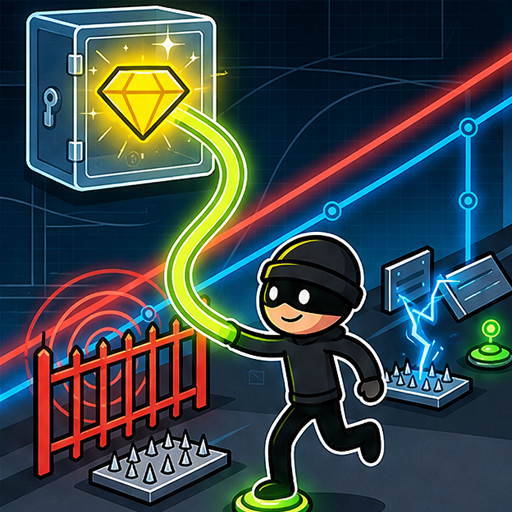 EaseGame template preview
 Copy the starter prompt
Start with one sentence that describes the complete heist loop.
Create a top-down cyber heist puzzle game where the player disables security terminals, avoids moving lasers, collects three artifacts, and escapes through a locked exit.
Reference prompt. Results may vary. Test it in the current EaseGame creator before treating it as a verified output.
What you'll build
The completed level combines ordered terminal interactions, visible laser timing, artifact collection, alarm pressure, safe-zone recovery, and a precise escape condition.
- Top-down movement and interaction
- Three ordered security terminals
- Three linked artifact pickups
- Moving laser-grid sections
- Four-step alarm meter
- Locked exit and restart flow
Build it step by step
Apply Cyber Heist
Open the template so its puzzle-heist framework and cyber facility presentation are available.
Map the dependency chain
Write the order: terminal, disabled laser section, artifact, next area, and final exit.
Test each terminal alone
Confirm interaction range, state change, feedback, and the correct laser section before testing the entire map.
Make laser timing readable
Use consistent movement, visible turn pauses, and safe waiting spaces rather than unpredictable hazards.
Connect alarm and recovery
Raise the alarm by a fixed amount, return the player to a safe zone, and preserve completed puzzle state as intended.
Run every mission outcome
Test early exit, wrong terminal order, four laser hits, all artifacts, successful escape, failure, and restart.
Troubleshooting
A terminal activates out of order
Add a prerequisite state and display which earlier terminal still needs to be disabled.
Lasers feel random
Use fixed paths, constant speed, and a visible pause before direction changes.
Artifacts can be collected too early
Link each artifact to the completed state of its matching security terminal.
The exit opens at the wrong time
Define the exit rule as two explicit conditions: all terminals disabled and all artifacts collected.
Make it your own
- Create a stealth route with optional cameras and no timer.
- Add a cooperative mode with one hacker and one artifact runner after solo rules are stable.
- Replace the alarm meter with a limited number of detection strikes.
- Create alternate terminal orders that change the safest escape route.
Quality checklist
- Terminal dependencies work in order.
- Every laser has a readable movement pattern.
- Artifacts remain locked until their security state changes.
- Alarm increases by the intended amount.
- Recovery does not corrupt completed puzzle states.
- Exit, failure, success, and restart conditions work.
Cyber Heist FAQ
What makes Cyber Heist a puzzle game?
Progress depends on understanding dependencies: terminals disable laser sections, disabled sections expose artifacts, and the completed objectives unlock the exit. The challenge should come from readable rules and route planning rather than hidden or random failure.
How many terminals should the first heist use?
Three terminals are enough to test interaction order, state changes, laser dependencies, artifact access, and the exit rule. Expand the facility only after the complete three-terminal mission works consistently.
How should the alarm meter work?
Use a fixed increase for each detected laser hit and show the new percentage immediately. State whether completed terminals and collected artifacts persist after recovery, and fail the mission at a clearly defined threshold.
Can Cyber Heist become a multiplayer game?
Yes, but first stabilize the solo dependency chain. For cooperation, give players distinct roles, shared alarm state, synchronized terminal effects, one team escape condition, and clear behavior when one player is detected.
How do I keep laser puzzles fair?
Use fixed paths, visible movement, consistent speed, short pauses before direction changes, and safe observation spaces. Players should be able to learn timing rather than rely on guessing.
Build a readable Cyber Heist
Make every dependency visible, test each security system separately, and verify both escape and failure paths.