

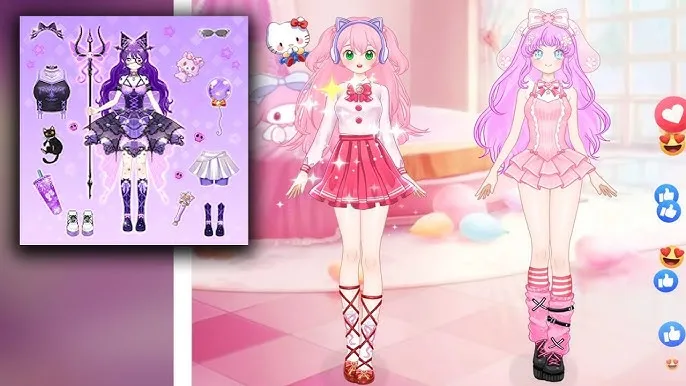
Idol Livestream: Doll Dress Up — Every Outfit Tells a Story, Not Just a Style
At first glance, Idol Livestream: Doll Dress Up feels simple and approachable. Pick a doll. Choose some clothes. Add a few accessories. Done. The controls are intuitive, the visuals are charming, and everything seems designed for quick, casual fun.
But after a few rounds, something subtle begins to shift. You start hesitating before choosing an outfit. You compare combinations more carefully. You even redo entire looks just because something doesn’t “feel right.”
That’s when you realize something important. You’re no longer just dressing up. You’re deciding who this character is—and what they represent.
From Outfit Matching to Character Building
Every outfit sends a signal, whether you realize it or not.
- A soft pink dress with ribbons doesn’t just look pretty—it suggests warmth, sweetness, and approachability.
- A dark-toned outfit with sharp accessories doesn’t just look stylish—it communicates confidence, distance, and attitude.
- An elegant long skirt with minimal decoration conveys calmness, restraint, and maturity.
These are not random combinations. They shape how the character is perceived.
Over time, you stop asking, “What looks good?” and start asking, “What kind of person does this look like?” That shift changes everything, because now, every styling decision becomes a character decision.
Style Is Not a Label, It’s a Language
At first, styles like “cute,” “cool,” or “elegant” feel like simple categories, but as you play more, they begin to feel more like a language.
You’re not just selecting a style. You’re communicating a feeling. And like any language, clarity matters.
If you mix too many conflicting elements—soft colors with aggressive accessories, elegant pieces with playful props—the message becomes unclear.
A strong outfit isn’t the one with the most items. It’s the one where everything points in the same direction.
Colors, textures, accessories, even the background all need to support the same idea. That’s when a character feels complete—and believable.
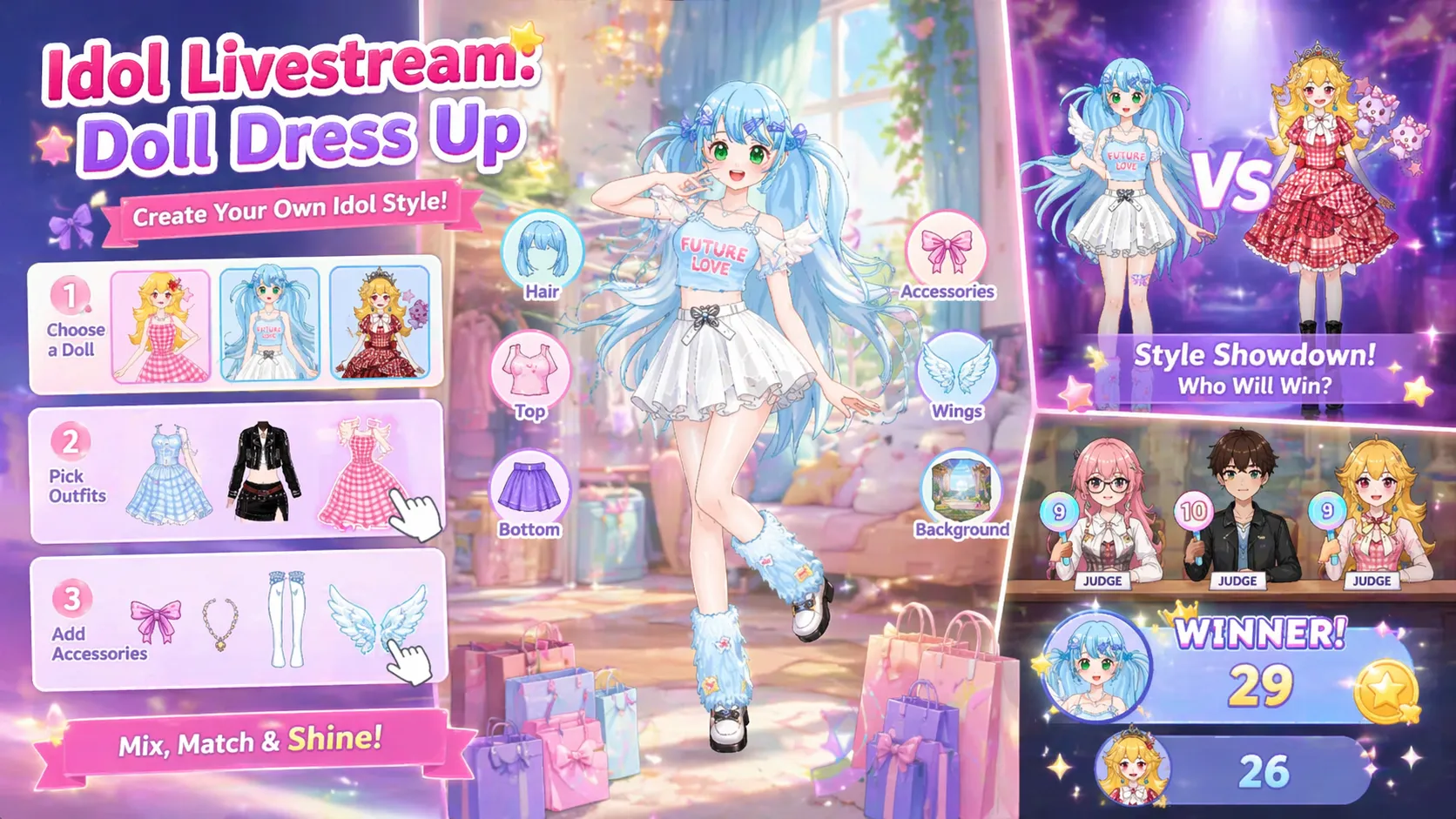
Why Some Outfits Win More Often
Many players assume winning is about effort or complexity. But in reality, it’s about clarity. Judges—or the game system—tend to favor designs that are easy to understand at a glance.
A clearly defined “cute” character often beats a visually busy but confusing mix. A focused aesthetic outperforms an overloaded one. This is because evaluation happens quickly.
If your outfit communicates its idea instantly, it has a strong advantage. If it requires interpretation, it risks being overlooked. In short, strong identity wins over visual noise.
What Players Are Really Doing: Expressing Themselves
What makes this system especially engaging is how personal it becomes. Players don’t just create random outfits. They recreate moods. Reflect preferences. Experiment with identity.
Sometimes, you design something close to your real-life taste. Other times, you explore a completely different persona—something you wouldn’t normally express.
This turns the game into more than just a mechanic. It becomes a space for self-expression without pressure.
You can be bold.
You can be soft.
You can be someone entirely different, even if just for a moment.
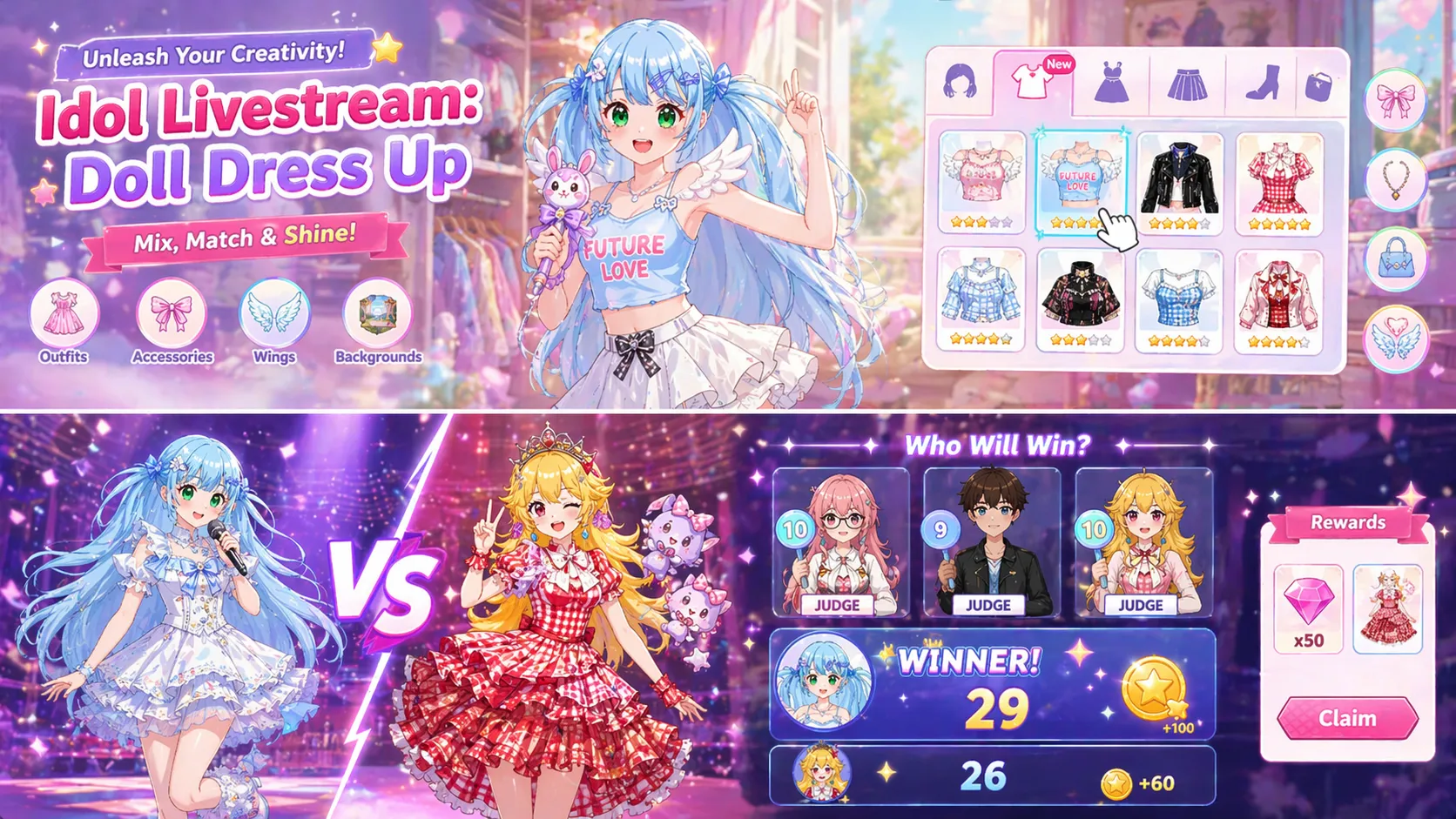
From Game to Reality: Why It Feels So Addictive
The reason this experience feels addictive isn’t just repetition. It’s meaning.
In Idol Livestream: Doll Dress Up, you’re not clicking randomly. You’re making decisions, refining ideas, and adjusting outcomes. Every result feels like something you created—not something you were given.
Even when you lose, it rarely feels frustrating. Instead, it creates a quiet motivation: “I can do this better next time.” That small push is powerful. It turns each round into another attempt—not just to win, but to express something more clearly than before.
Conclusion
Idol Livestream: Doll Dress Up is more than a dress-up game. It’s about identity, clarity, and expression.
Every outfit is a choice. Every choice builds a character. And every character tells a story.
So next time you play, pause for a moment.
Don’t just ask: “Does this look good?”
Ask something deeper.
Who is this character—and what do I want them to say?
April 24,2026